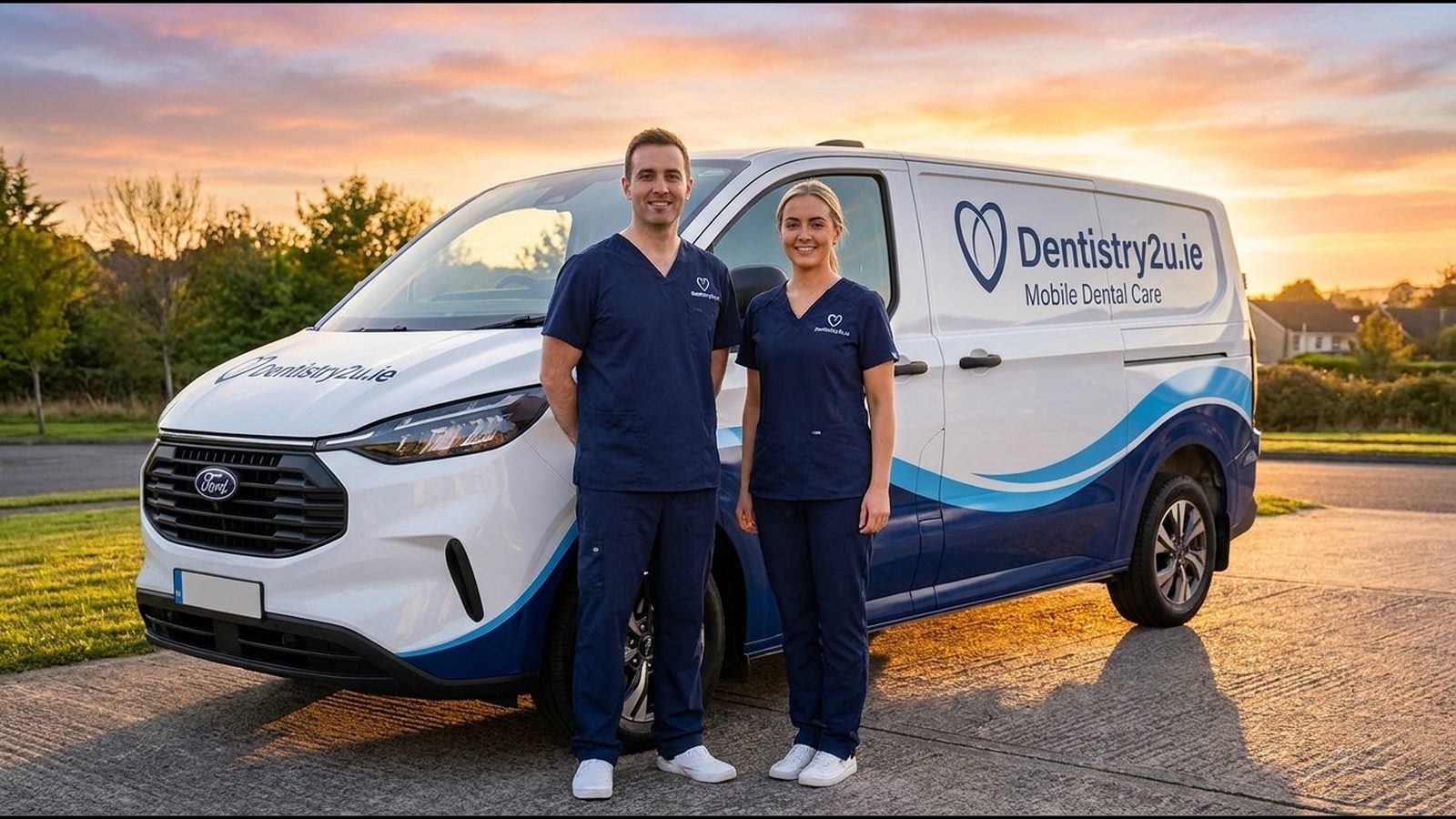
The dentist comes to you
A dentist and a dental nurse, with the full portable clinic, in your own home, your nursing home or your hospital bed — anywhere in Ireland.
What happens at the visit, what it costs, and how the Medical Card fits — in plain terms.
How a home visit works → For a director of nursing Dental care for your residentsA clinic day on site, consent and DTSS handled in advance, two teams if the numbers need it.
How a clinic day works → For yourself When getting to a clinic is difficultMobility, illness, anxiety or distance — the same dentist and the same equipment, in your own chair.
Book a visit →The visit, in order
Nothing is booked until you have heard what it involves and what it is likely to cost. This is what happens, and when.
-
1Day 0
You phone, or we phone you back
10 minutes, same working day
Tell us who the patient is, roughly what is wrong and where they are. We say what a visit would involve and what it is likely to cost. Nothing is booked yet.
-
2Before the visit
Eligibility and history
By phone and email
We check Medical Card or PRSI entitlement, take a medical history and current medications, and gather consent — from the patient, or from next of kin or the home where appropriate.
-
3The visit
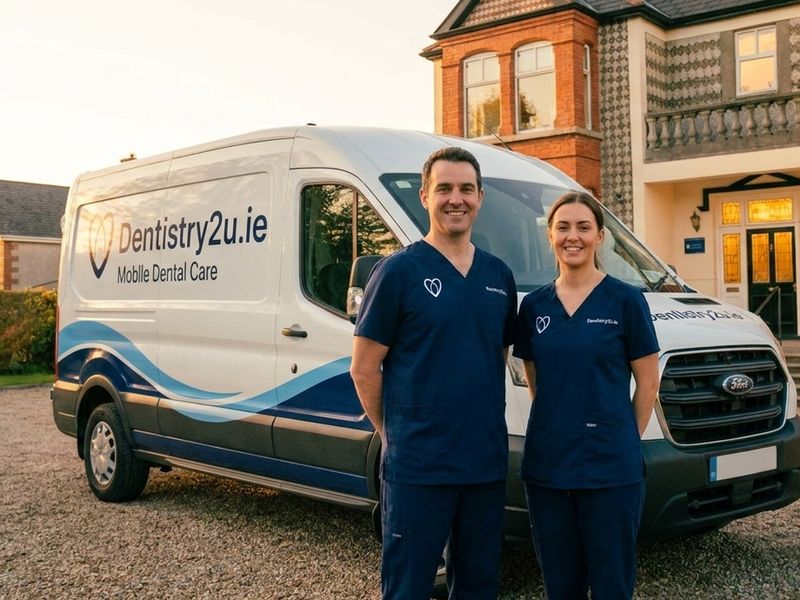
Dentist and nurse at the door
Usually 45–90 minutes
They bring the portable clinic in, set up where the patient is most comfortable, examine, and treat what can be treated on the day. Anything else is planned with you before they leave.
-
4Afterwards
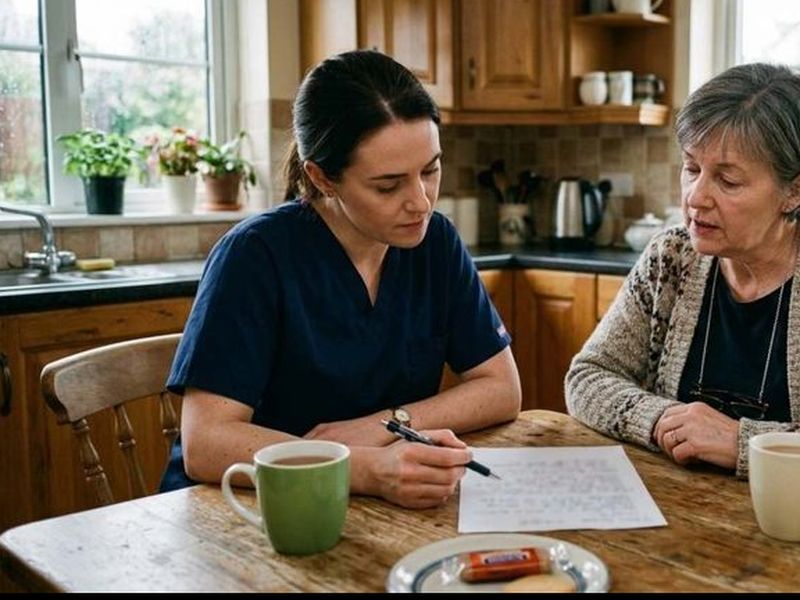
Plan, fitting, review
Dates agreed at the visit
Written aftercare. A return visit if dentures need fitting or treatment has a second stage. A review date, so the next problem is found while it is still small.
What comes through the door
The portable version of a surgery — not a stripped-down one. This is what the team carries in, and what each piece is for.
-
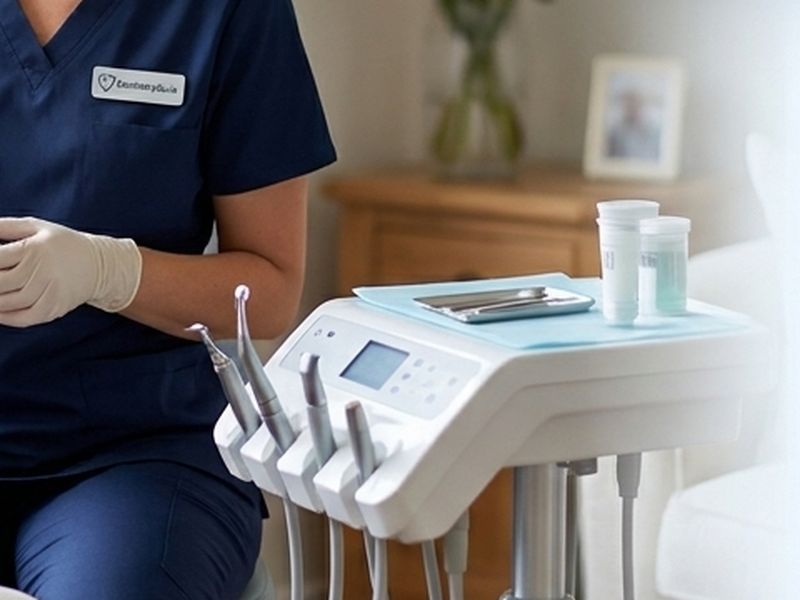
01Portable dental unit
Drill, air, water and light in one case — fillings and denture adjustments happen at the chair the patient is already in.
-
02Digital X-ray
A handheld unit and sensor. The image is on screen in seconds, so a decision is made at the visit, not at a second one.
-
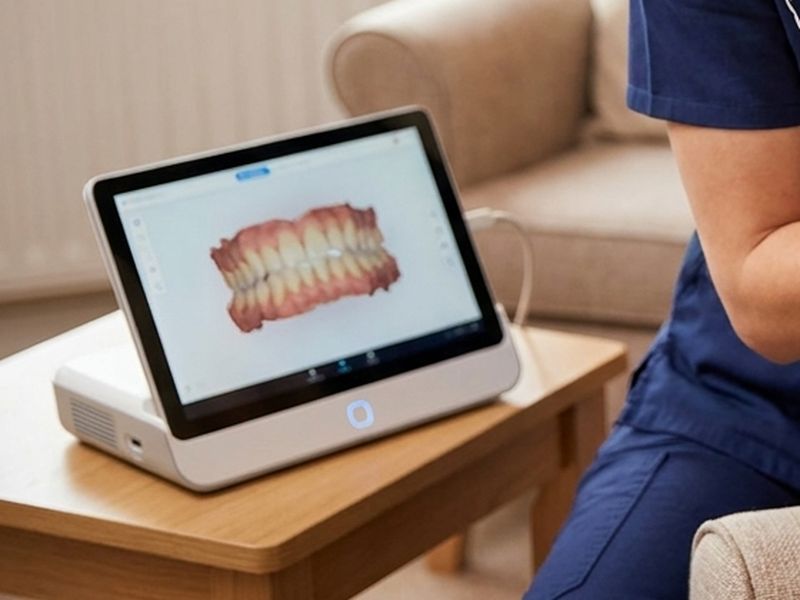
03Intraoral scanner
A digital impression instead of a tray of putty. Quicker, more accurate, and far kinder to someone who gags or cannot sit forward.
-
04Suction and sterilised instrument kits
Sealed kits opened in front of the patient, the same infection-control standard as the clinic.
-
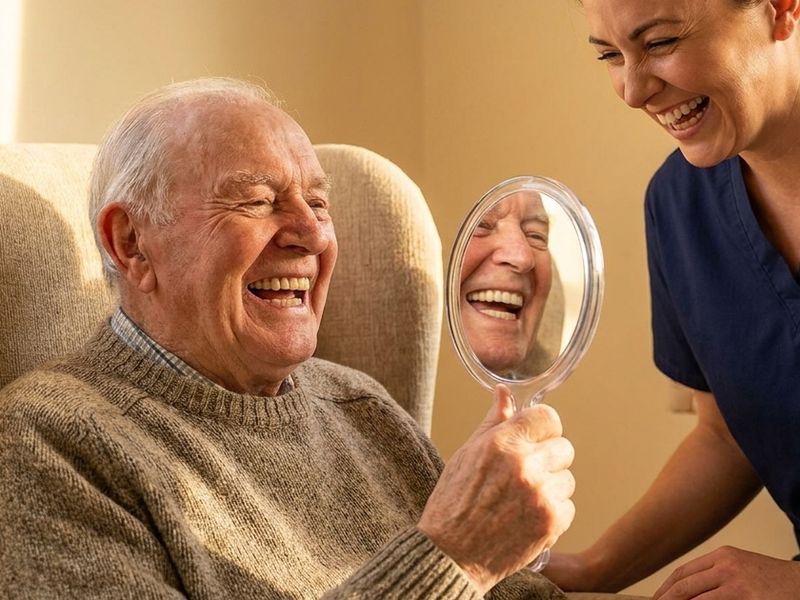
05Denture materials and a laboratory link
Relines and repairs are often done on the spot. New dentures go to our own Irish laboratory and come back in days.
-
06Local anaesthetic and emergency drugs
Extractions and fillings are done comfortably. The team carries the same emergency kit a surgery does.
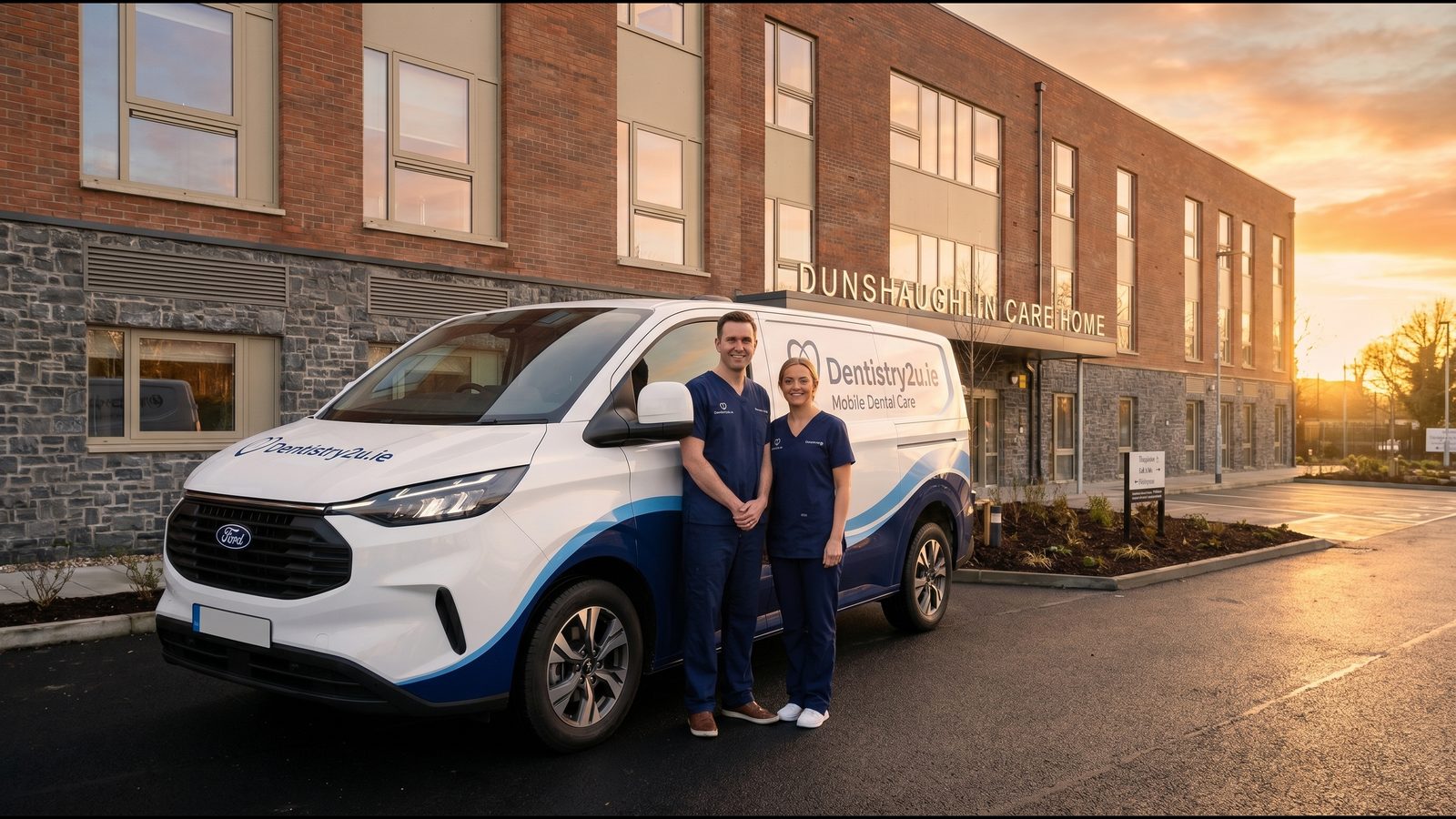
A clinic day, from the inside
45 residents on the list, two teams, one portable clinic. This is what the team found on one ordinary Tuesday.
38 patients seen in a day — and 40% of them had not seen a dentist in over five years.
What we treat at home
Everything a general dental practice does, apart from what needs a hospital theatre.
Denture care at home
Relines, repairs and adjustments, often on the spot. New dentures scanned at home and made in our own Irish laboratory.
Dentures fitted in the comfort of your own home
Full and partial dentures from first scan to final fitting, without leaving the house.
Routine dental examinations at home
A full check-up — teeth, gums, dentures, soft tissues and X-rays — in the comfort of home.
Oral health assessments at home
A thorough first assessment for a new patient or a whole home, with a written care plan for family and staff.
Emergency dental care at home
Toothache, abscess, swelling, a broken tooth or denture — seen within days, at home.
Simple fillings at home
Decay treated under local anaesthetic with the portable unit — including the root decay that dry mouth causes.
Tooth extraction at home
Painful, loose or broken teeth removed under local anaesthetic at home, with written aftercare and a follow-up if needed.
Cleaning and scaling at home
Plaque and tartar removed to settle bleeding gums and cut infection risk. PRSI scale and polish claimed for you.
Preventive dental care at home
Fluoride, dry-mouth management, denture hygiene and coaching for whoever helps with brushing.
What a visit costs
Cost depends on where the patient is, how many people we are seeing and what treatment turns out to be needed. We give you the likely range on the first phone call — nothing is booked until you have heard it — and a written quote with every cost on it before any treatment begins.
What changes the cost
- Where the patient is, and how far the team travels to get there
- How many people we are seeing on that visit — a care home with twelve residents is not a single house call
- What the examination finds, and which treatment turns out to be needed
- Whether the patient is covered by a Medical Card or PRSI, which we check before anyone is booked
Ways it is paid for
- HSE Medical Card
- Many treatments are covered under the Dental Treatment Services Scheme for eligible medical card holders. Call-out fees are not covered. We check eligibility before the appointment, not after.
- PRSI
- PRSI-covered patients, including the self-employed, are entitled to a free examination each year and a subsidised scale and polish. We check entitlement and claim it for you.
- Tax relief
- 20% tax relief is available on non-routine dental treatment. We complete the Med 2 form for you.
- Humm
- The cost of higher-value treatment, such as a full set of dentures, can be spread in monthly instalments through Humm.
- Credit Union
- We work with St Canice's, Progressive (Balbriggan) and Capital (Sundrive) Credit Unions, and many families find a Credit Union loan the simplest route.
From the road
What a clinic day actually looks like, written by the people who did it.
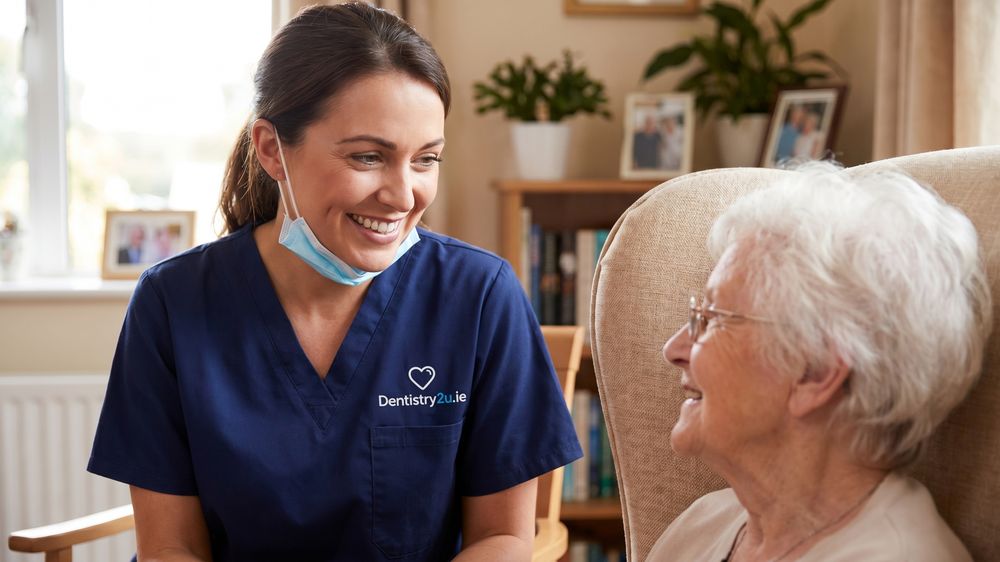
More than a smile: the life-changing impact of domiciliary dental care
Oral health is the gateway to systemic health. A resident who cannot chew cannot maintain nutrition; a resident embarrassed by their teeth becomes socially isolated.
Read the case study →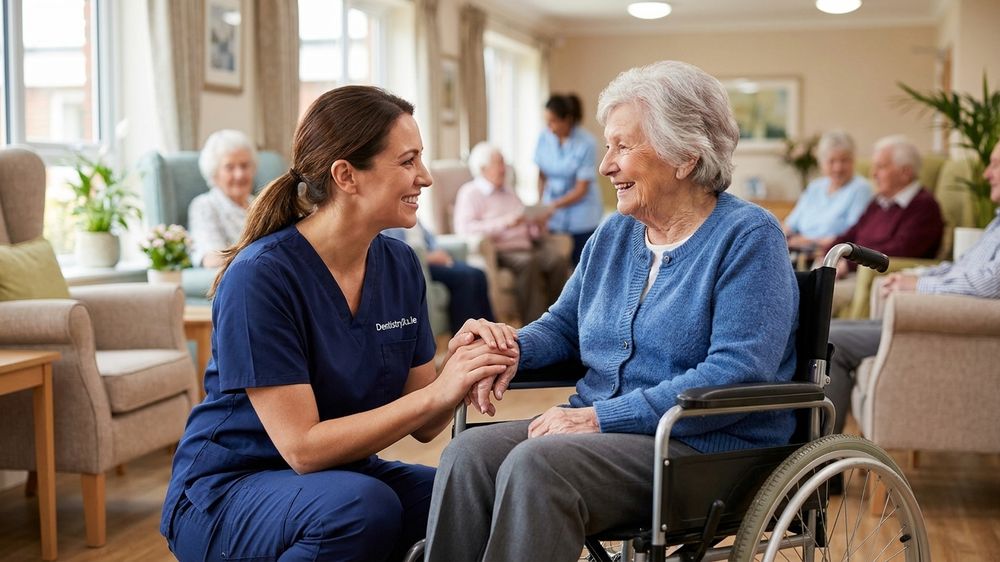
A day providing dental care in a local nursing home
45 residents on the list, two teams, one portable clinic. 38 patients seen in a day — and 40% of them had not seen a dentist in over five years.
Read the case study →Eight bases. You will never need to visit one.
The bases are where the dentists, the laboratory and the equipment live. The visit comes to you — all 32 counties.
Sundrive Dental & Implant Clinic
Units 1 & 2 Sundrive Shopping Centre, Sundrive Road, Kimmage, Dublin, D12 NX89 +353 1 964 0111Mon–Fri 9:00am – 6:00pm
Saturday 9:00am – 6:00pm
Dentistry2U Balbriggan
6 & 7 Chapel Street, Balbriggan, Co. Dublin, K32 A398 01 690 3464Mon–Fri 9:00am – 6:00pm
Saturday 8:30am – 5:30pm
Dentistry2U Castleknock
Ashleigh Centre, 1 Castleknock Road, Castleknock, Dublin 15, D15 W9DH +353 1 806 6066Monday 9:00am – 5:30pm
Tuesday 8:00am – 5:00pm
Wednesday 8:00am – 6:00pm
Thursday 8:00am – 5:00pm
Friday 9:00am – 5:00pm
Dentistry2U Dublin 2
17 Fitzwilliam Street Upper, Dublin 2, D02 X368 01 676 1464Mon–Fri 8:30am – 5:00pm
Saturday 9:00am – 5:00pm
Dentistry2U Kildare Town
Claregate Street, Kildare Town, Co. Kildare, R51 P963 +353 45 521 408Mon–Fri 9:00am – 5:00pm
Friary Court Dental
Friary Street, Kilkenny, Co. Kilkenny 056 776 5613Monday 8:30am – 5:00pm
Tuesday 8:00am – 6:00pm
Wednesday 8:30am – 5:30pm
Thursday 9:00am – 7:00pm
Friday 8:30am – 5:00pm
Saturday 9:00am – 5:00pm
Dentistry2U Maynooth
Unit 7, Manor Mills Shopping Centre, Maynooth, Co. Kildare, W23 WT72 +353 1 505 4276Monday 8:00am – 6:00pm
Tuesday 9:00am – 6:00pm
Wednesday 8:00am – 6:00pm
Thursday 8:00am – 5:00pm
Friday 9:00am – 5:00pm
Questions families ask first
If your question is not answered here, please give us a call. It is quicker than a form, and whoever answers can tell you what a visit would cost.
Do you really bring everything to the house?
Yes. A dentist and a dental nurse arrive with a portable dental unit, a handheld digital X-ray, an intraoral scanner, suction and sealed sterilised instrument kits. The only things we cannot do at home are treatments that need a hospital theatre.
Who is this for?
Anyone who finds it hard to get to a dental practice — older people, nursing and residential home residents, people recovering from illness or surgery, people with dementia or a disability, and anyone whose anxiety makes a clinic visit impossible.
How quickly can you come?
We phone back the same working day and, for pain or a broken denture, aim to visit within a few days. Nursing-home clinic days are planned around the home's rota, usually a few weeks ahead.
What does it cost?
It depends on where the patient is, how many people we are seeing and what treatment turns out to be needed. We give you the likely range on the first phone call and a written quote before any treatment starts. Medical Card and PRSI cover is checked first.
Is it safe to treat someone outside a clinic?
The equipment is the portable version of what a surgery uses, the infection-control standard is the same, and every clinician is registered with the Dental Council of Ireland and Garda-vetted. We do not attempt at home what belongs in a hospital.
Can you see someone with dementia?
Yes, and we do so every week. Our nurses are trained in supporting people with dementia. We keep the same team where we can, go at the patient's pace, and involve family or care staff in consent and in the visit itself.
Do you offer sedation?
Sedation for anxious patients is available. Whether it can be given at home or needs one of our clinic bases depends on the patient's medical history — we will tell you on the call.
Does a dentist still need to check someone who has full dentures?
Yes. Dentures wear, gums change and mouths still need checking. We reline, repair and replace dentures at home, and every examination includes a check of the soft tissues for anything that needs attention.
Tell us who the patient is
We phone you back the same working day with what a visit would involve and what it is likely to cost. If someone is in pain, ring us — it is faster.