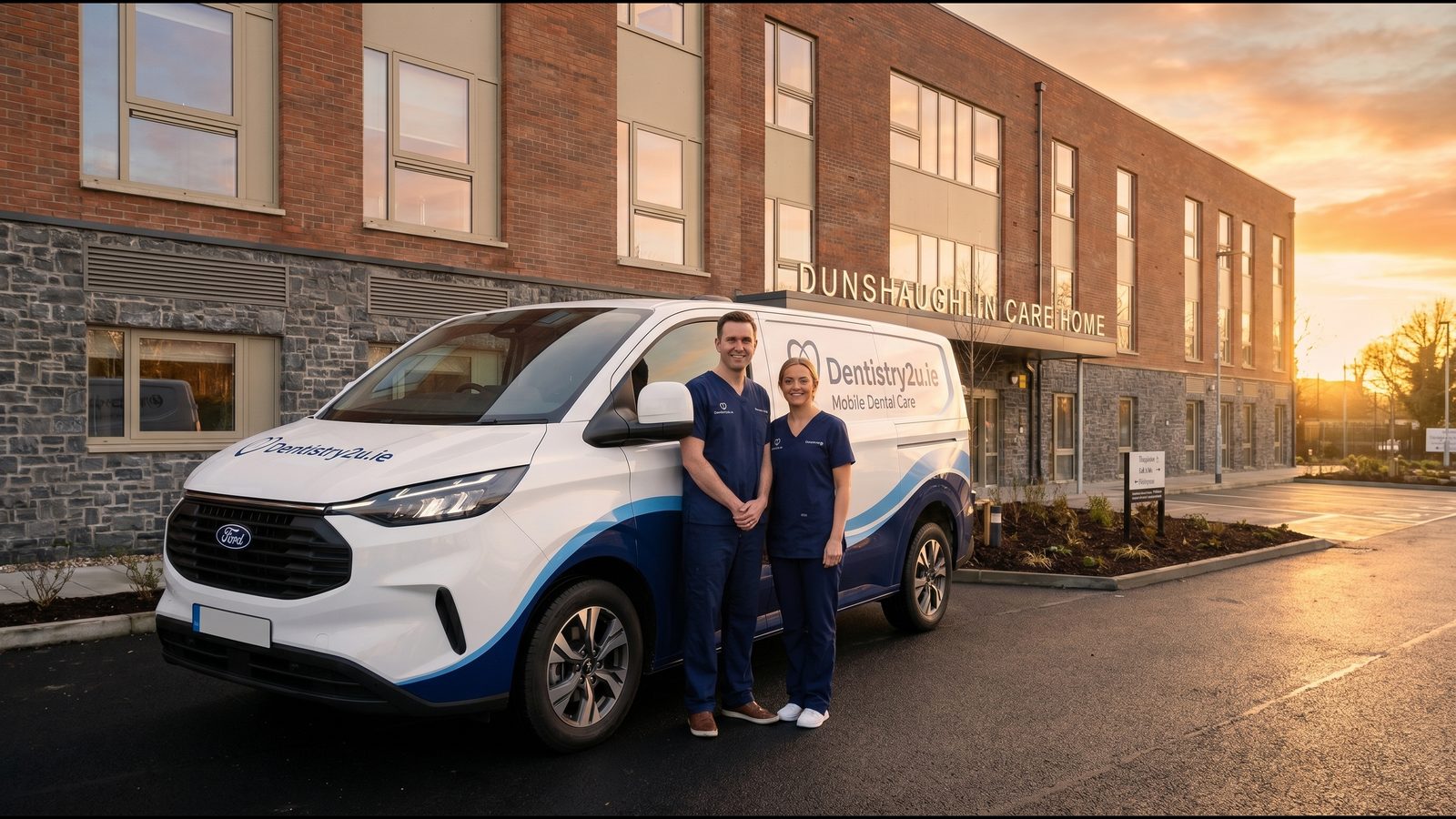
Dental care for nursing homes
A clinic day on site: every resident assessed, treatment on the day, DTSS claims and consent handled before we arrive, and a written care plan on file for each person.
A treatment room for residents who can walk to it; bedrooms for those who cannot.
In the homes we visit for the first time, it is common to find that four in ten residents have not seen a dentist in over five years. The reasons are the usual ones — transport, staffing, a resident who cannot manage the journey — and the result is the same: pain that goes unreported, dentures that no longer fit, weight that drifts down, and gaps that an inspection will eventually find.
A clinic day fixes that for the whole home at once. Two teams if the numbers justify it, a treatment room for the residents who can walk to it and bedroom visits for those who cannot, and paperwork done before anyone arrives rather than on the day.
How a clinic day works
1. You phone us
The director of nursing or the person in charge tells us roughly how many residents, what the home has noticed, and which weekdays suit the rota. We agree a date, usually a few weeks out.
2. We send the resident list template and consent forms
The home returns the list with medical histories, medications and medical card numbers. Consent is gathered from residents or their next of kin in advance. We check DTSS eligibility for every resident before the day.
3. The day itself
The teams arrive with the full portable clinic. Every listed resident gets an oral health assessment; treatment that can be done on the day — scaling, fillings, extractions, denture relines and repairs — is done. Anything needing a second visit is scheduled before we leave.
4. Afterwards
A written assessment and care plan for each resident, on file for HIQA. Mouth-care guidance for staff. A return date for fittings and follow-ups, and a routine recall so the home is not starting from scratch again next year.
What it costs the home
For residents with a medical card, examinations and most treatment are covered under the DTSS — which, subject to eligibility, often means no cost to the home and no cost to the resident for that care. Private treatment is quoted to the family before it starts.
What we need from you
- A room with a chair, a table and a plug socket — a day room or an empty bedroom is ideal
- The resident list, with medications and medical card numbers, a week before the day
- Consent forms returned, or next-of-kin contact details so we can obtain consent
- A member of staff who knows the residents available to the team on the day
What comes through the door
The same portable clinic for a home of sixty as for a single house call — multiplied by two teams where the list is long.
-
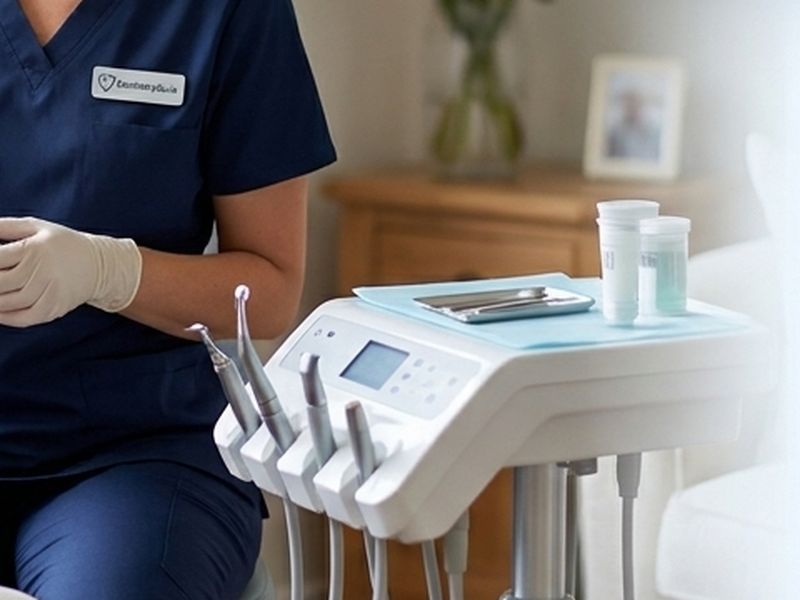
01Portable dental unit
Drill, air, water and light in one case — fillings and denture adjustments happen at the chair the patient is already in.
-
02Digital X-ray
A handheld unit and sensor. The image is on screen in seconds, so a decision is made at the visit, not at a second one.
-
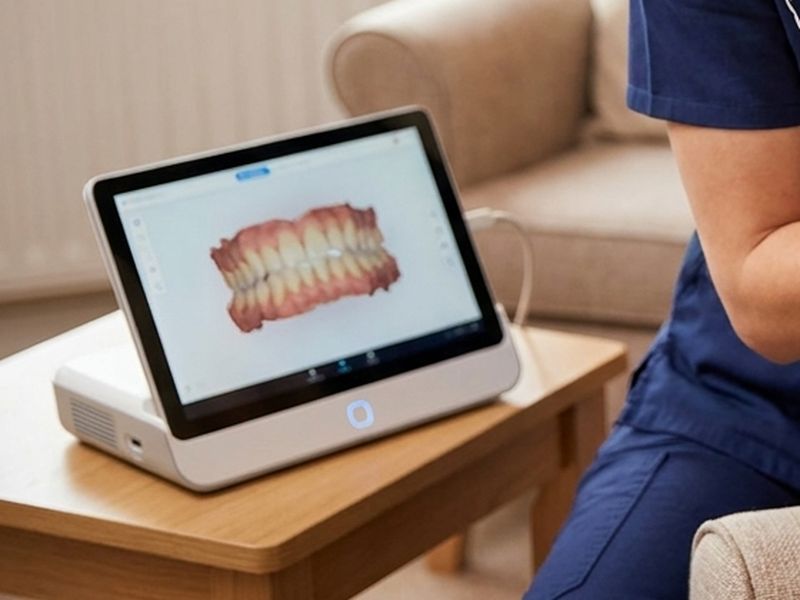
03Intraoral scanner
A digital impression instead of a tray of putty. Quicker, more accurate, and far kinder to someone who gags or cannot sit forward.
-
04Suction and sterilised instrument kits
Sealed kits opened in front of the patient, the same infection-control standard as the clinic.
-

05Denture materials and a laboratory link
Relines and repairs are often done on the spot. New dentures go to our own Irish laboratory and come back in days.
-
06Local anaesthetic and emergency drugs
Extractions and fillings are done comfortably. The team carries the same emergency kit a surgery does.
Questions from care homes
If your question is not answered here, please give us a call — it is quicker than a form.
How many residents can you see in a day?
One team assesses and treats roughly twenty to twenty-five residents in a day; two teams, forty or more. The case study on this site describes a day where 38 of 45 residents were seen. Bed-bound residents take longer than those who can come to the treatment room, and we plan the day around your list.
Do you see residents who cannot consent for themselves?
Yes, with consent from next of kin or a legal representative, recorded on the form. Where a resident cannot tolerate treatment we say so, keep them comfortable, and note it in the care plan.
What paperwork does the home get?
A dated, clinician-signed oral health assessment and care plan for each resident, a treatment record for anything done, and a summary for the person in charge. It is written for HIQA as much as for you.
Can you mark dentures?
Yes, on request, and we recommend it. A named denture is the one that comes back from the laundry.
How soon can you come for a resident in pain?
Same working day for advice; usually within a few days for the visit. Phone the office rather than wait for the next clinic day.
Do you train staff?
A short staff session — positioning, denture care and what to report — is part of how we work with homes. Ask for it when you book the clinic day.
What a clinic day costs
For residents with a Medical Card, examinations and most treatment are covered under the DTSS — which often means no cost to the home and no cost to the resident for that care. Private treatment is quoted to the family before it starts. Call us and we will tell you what a clinic day would involve and what it would cost.
What changes the cost
- Where the patient is, and how far the team travels to get there
- How many people we are seeing on that visit — a care home with twelve residents is not a single house call
- What the examination finds, and which treatment turns out to be needed
- Whether the patient is covered by a Medical Card or PRSI, which we check before anyone is booked
Ways it is paid for
- HSE Medical Card
- Many treatments are covered under the Dental Treatment Services Scheme for eligible medical card holders. Call-out fees are not covered. We check eligibility before the appointment, not after.
- PRSI
- PRSI-covered patients, including the self-employed, are entitled to a free examination each year and a subsidised scale and polish. We check entitlement and claim it for you.
- Tax relief
- 20% tax relief is available on non-routine dental treatment. We complete the Med 2 form for you.
- Humm
- The cost of higher-value treatment, such as a full set of dentures, can be spread in monthly instalments through Humm.
- Credit Union
- We work with St Canice's, Progressive (Balbriggan) and Capital (Sundrive) Credit Unions, and many families find a Credit Union loan the simplest route.
Arrange a clinic day
Tell us the size of the home and which weekdays suit the rota. We send the resident list template and consent forms the same day.