What happens on a home visit
The phone call, the paperwork, the knock at the door, and everything the team carries in. Start to finish, with nothing left vague.
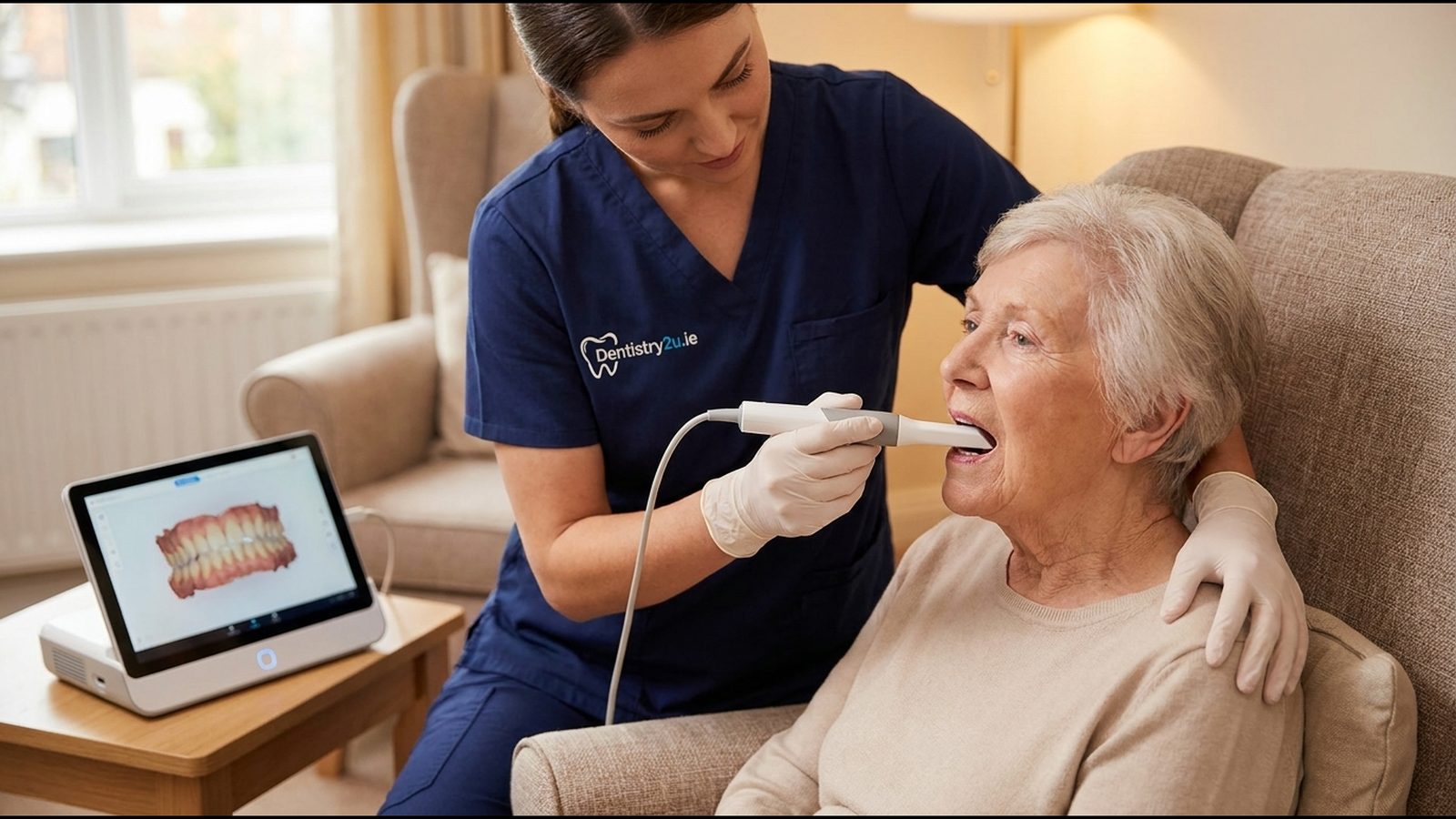
The examination happens in the chair the patient sits in every day.
The visit, in order
Four stages. The timings are a guide rather than a promise — a single patient at home and a full care home are different days.
-
1Day 0
You phone, or we phone you back
10 minutes, same working day
Tell us who the patient is, roughly what is wrong and where they are. We say what a visit would involve and what it is likely to cost. Nothing is booked yet.
-
2Before the visit
Eligibility and history
By phone and email
We check Medical Card or PRSI entitlement, take a medical history and current medications, and gather consent — from the patient, or from next of kin or the home where appropriate.
-
3The visit
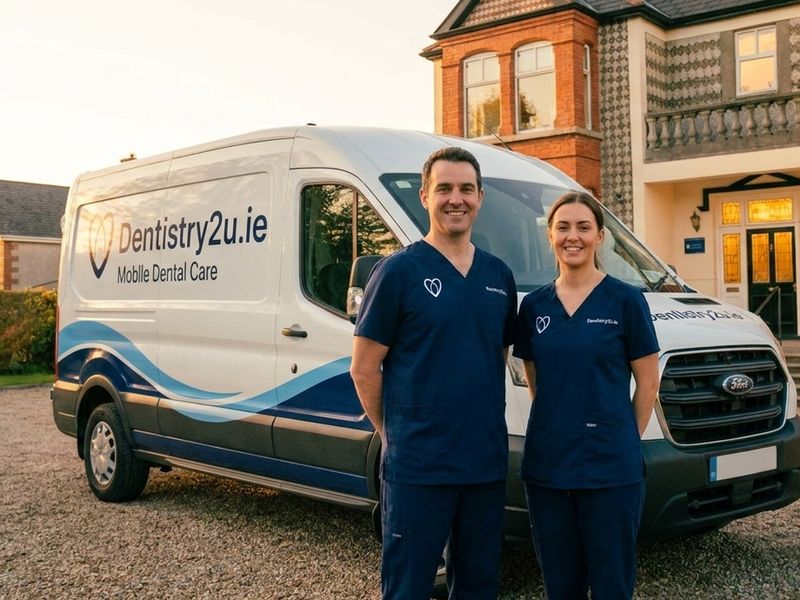
Dentist and nurse at the door
Usually 45–90 minutes
They bring the portable clinic in, set up where the patient is most comfortable, examine, and treat what can be treated on the day. Anything else is planned with you before they leave.
-
4Afterwards
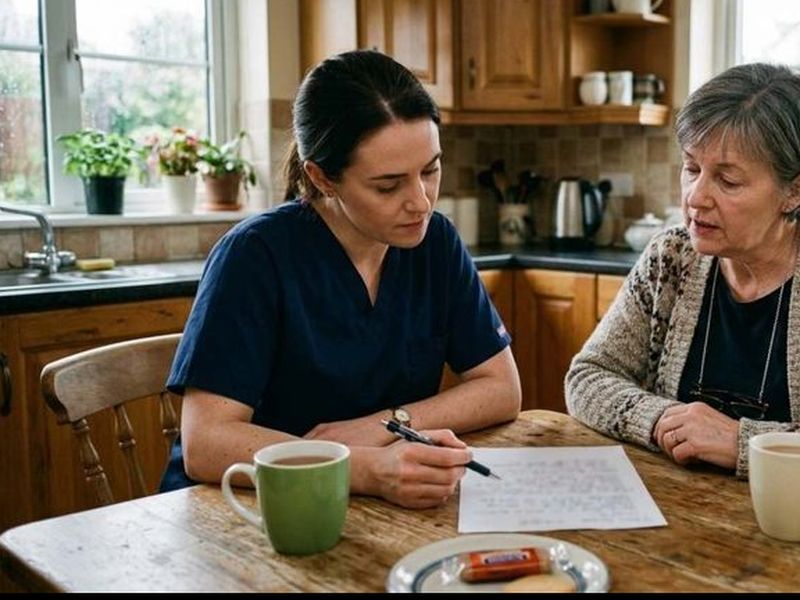
Plan, fitting, review
Dates agreed at the visit
Written aftercare. A return visit if dentures need fitting or treatment has a second stage. A review date, so the next problem is found while it is still small.
What comes through the door
People assume a home visit means a look and a referral. It means a dentist and a nurse arriving with this, and treating on the day.
-
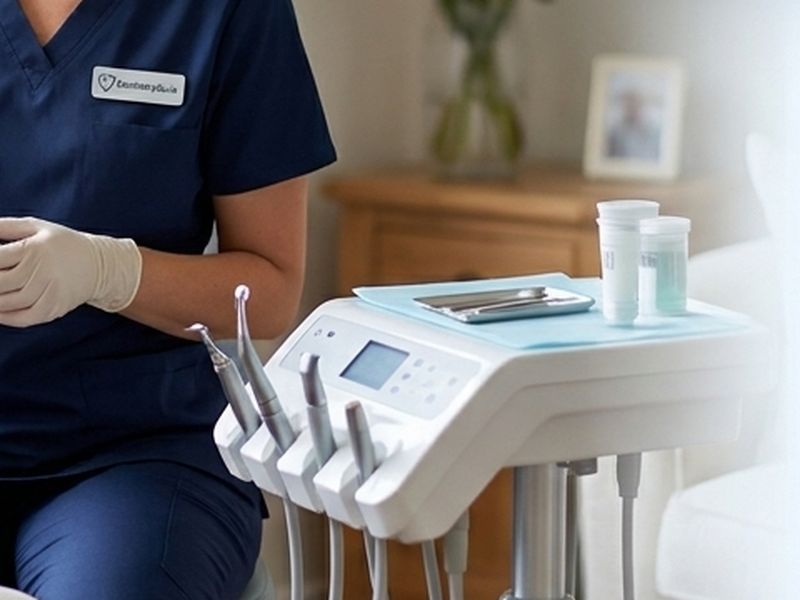
01Portable dental unit
Drill, air, water and light in one case — fillings and denture adjustments happen at the chair the patient is already in.
-
02Digital X-ray
A handheld unit and sensor. The image is on screen in seconds, so a decision is made at the visit, not at a second one.
-
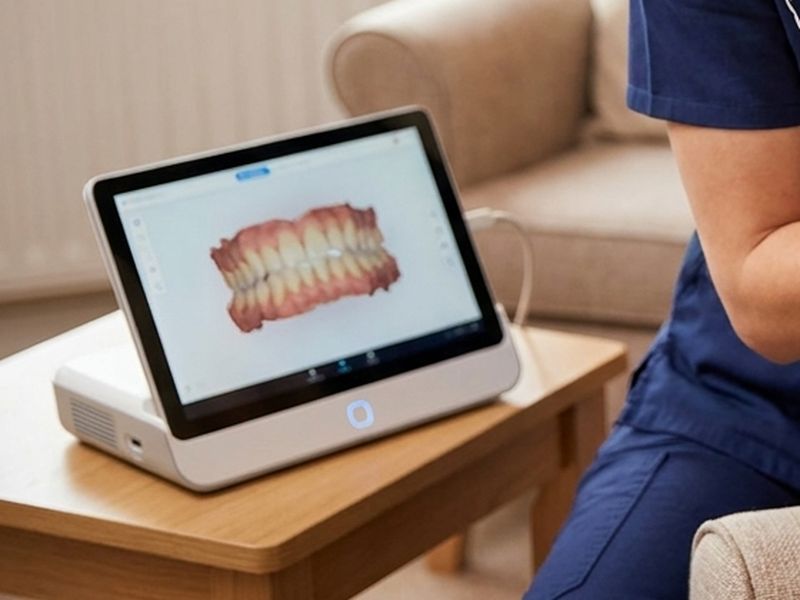
03Intraoral scanner
A digital impression instead of a tray of putty. Quicker, more accurate, and far kinder to someone who gags or cannot sit forward.
-
04Suction and sterilised instrument kits
Sealed kits opened in front of the patient, the same infection-control standard as the clinic.
-
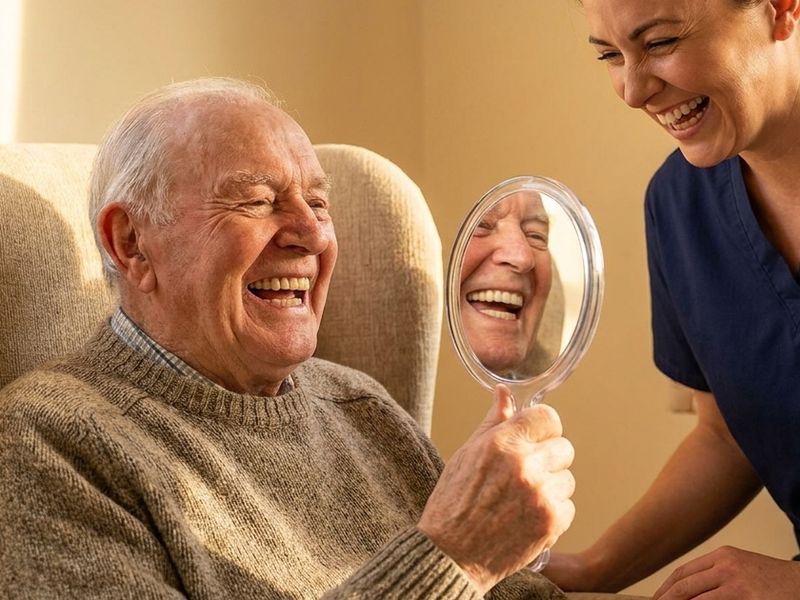
05Denture materials and a laboratory link
Relines and repairs are often done on the spot. New dentures go to our own Irish laboratory and come back in days.
-
06Local anaesthetic and emergency drugs
Extractions and fillings are done comfortably. The team carries the same emergency kit a surgery does.
What can be done at home
Almost everything a general practice does: examinations with digital X-rays, oral health assessments, an oral cancer check every time, scaling and polishing, fluoride and preventive care, fillings, extractions, emergency pain relief, and the whole of denture care — adjustments, relines, repairs and new dentures made in our own laboratory.
What needs a clinic instead
Implants, orthodontics, root canal treatment, surgical extractions and sedation for some patients are done at one of our eight bases, not on a home visit. We would rather tell you now than have you wait for an appointment that cannot help. Where an assessment finds one of these, we say so on the day, manage any pain in the meantime, and arrange the appointment ourselves.
Where the visit happens
Wherever the patient is most comfortable. A sitting-room armchair works well; so does a bed, with the patient propped up. We need a plug socket and enough room for two people and a case. In a nursing home we set up a treatment room for residents who can walk to it, and go to the rooms of those who cannot.
Who is in the room
A dentist and a dental nurse, both registered with the Dental Council of Ireland and Garda-vetted. A family member or carer is welcome to stay — for a patient with dementia we would rather they did.
What a visit costs
Cost depends on where the patient is, how many people we are seeing and what treatment turns out to be needed. We give you the likely range on the first phone call — nothing is booked until you have heard it — and a written quote with every cost on it before any treatment begins.
What changes the cost
- Where the patient is, and how far the team travels to get there
- How many people we are seeing on that visit — a care home with twelve residents is not a single house call
- What the examination finds, and which treatment turns out to be needed
- Whether the patient is covered by a Medical Card or PRSI, which we check before anyone is booked
Ways it is paid for
- HSE Medical Card
- Many treatments are covered under the Dental Treatment Services Scheme for eligible medical card holders. Call-out fees are not covered. We check eligibility before the appointment, not after.
- PRSI
- PRSI-covered patients, including the self-employed, are entitled to a free examination each year and a subsidised scale and polish. We check entitlement and claim it for you.
- Tax relief
- 20% tax relief is available on non-routine dental treatment. We complete the Med 2 form for you.
- Humm
- The cost of higher-value treatment, such as a full set of dentures, can be spread in monthly instalments through Humm.
- Credit Union
- We work with St Canice's, Progressive (Balbriggan) and Capital (Sundrive) Credit Unions, and many families find a Credit Union loan the simplest route.
Questions about the visit
If your question is not answered here, please give us a call — it is quicker than a form.
Do you really bring everything to the house?
Yes. A dentist and a dental nurse arrive with a portable dental unit, a handheld digital X-ray, an intraoral scanner, suction and sealed sterilised instrument kits. The only things we cannot do at home are treatments that need a hospital theatre.
Who is this for?
Anyone who finds it hard to get to a dental practice — older people, nursing and residential home residents, people recovering from illness or surgery, people with dementia or a disability, and anyone whose anxiety makes a clinic visit impossible.
How quickly can you come?
We phone back the same working day and, for pain or a broken denture, aim to visit within a few days. Nursing-home clinic days are planned around the home's rota, usually a few weeks ahead.
What does it cost?
It depends on where the patient is, how many people we are seeing and what treatment turns out to be needed. We give you the likely range on the first phone call and a written quote before any treatment starts. Medical Card and PRSI cover is checked first.
Is it safe to treat someone outside a clinic?
The equipment is the portable version of what a surgery uses, the infection-control standard is the same, and every clinician is registered with the Dental Council of Ireland and Garda-vetted. We do not attempt at home what belongs in a hospital.
Not sure what is actually needed?
Tell us who the patient is, what you have noticed and where they are. We will say what a visit would involve and what it is likely to cost.