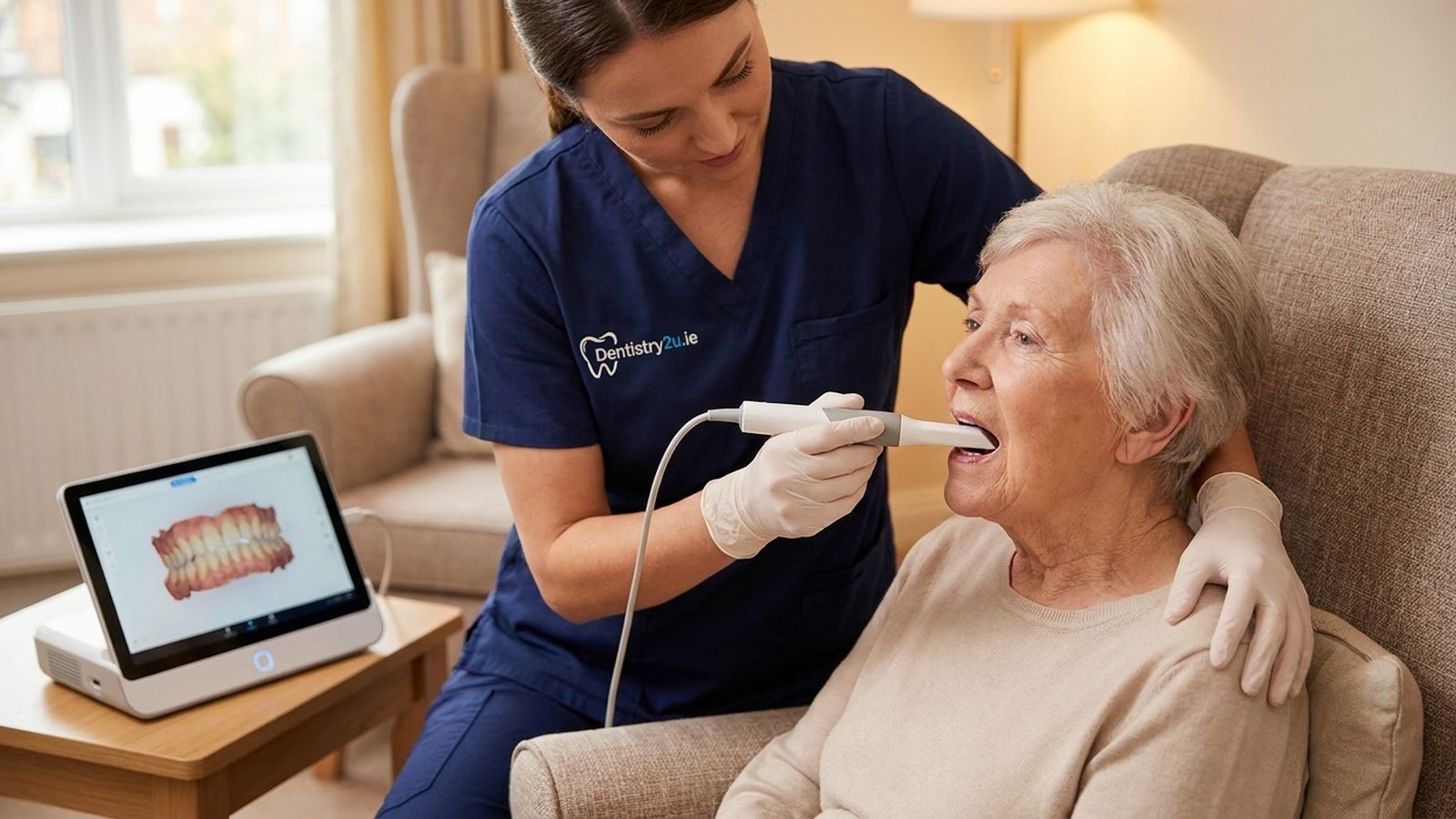
Routine examinations at home
The check-up that most housebound people quietly stopped having, done properly, in their own chair.
Digital X-rays are read on screen at the visit, so a decision is made on the day.
When someone stops being able to get to the dentist, the check-ups stop first and the problems arrive later — a broken tooth at a family event, an abscess on a bank holiday weekend, a denture that has been rubbing for months. A routine examination at home breaks that pattern.
It is the same examination a clinic does: every tooth, the gums, any dentures, the soft tissues of the mouth, and X-rays where they are needed. It takes about half an hour, and the patient does not have to move.
Who this is for
- Older people who have not seen a dentist in years because getting there became impossible
- Nursing and residential home residents — we examine a whole home on a clinic day
- People with a medical card entitled to an examination under the DTSS
- PRSI-covered patients entitled to a free examination each year
What happens on the visit
History first
Medications, medical conditions and anything that has changed since the last visit. Many older patients take medicines that dry the mouth or thin the blood, and both change what we do.
The examination
Every tooth, the gums, the tongue, palate and cheeks, and any dentures — in and out of the mouth. A handheld digital X-ray is used where a tooth needs a closer look, and the image is on screen in seconds.
Oral cancer check
Every examination includes a soft-tissue check for anything that needs referral. It takes two minutes and it is the part of the visit most likely to matter.
The plan, in plain words
What we found, what needs doing, what can wait, and what each option would cost. Small things — a scale and polish, a denture adjustment — are usually done there and then.
Afterwards
A review date is set before we leave — typically six or twelve months, sooner if something is being watched. Families and care staff get the findings in writing.
Cost and cover
A routine examination is covered under the DTSS for eligible medical card holders, and PRSI-covered patients — including the self-employed — are entitled to one free examination each calendar year. We check both before the visit and claim on your behalf. See what a visit costs and every way it can be paid for.
Questions families ask about this
If your question is not answered here, please give us a call — it is quicker than a form.
How long does the examination take?
About thirty minutes for one patient at home, including the history and the conversation afterwards. On a nursing-home clinic day the team works through the resident list at roughly that pace.
Can you take X-rays at home?
Yes. We use a handheld digital X-ray unit with a small sensor. The dose is very low, the image is on screen immediately, and we read it with you at the visit.
Is the PRSI examination really free?
For patients with enough PRSI contributions, one examination per calendar year is free and a scale and polish is subsidised. We check entitlement in advance so you know before we come.
Arrange a visit
Tell us who the patient is and where they are, and we will phone you back the same working day with what a visit would involve and what it is likely to cost.